
The mega-fund recruiting circus gets all the headlines. But here’s what nobody tells you: off-cycle is the norm for middle market and lower middle market private equity firms—not a backup plan.
Large firms, such as mega funds, dominate the headlines and set the pace for on-cycle recruiting, while most other firms in the middle market operate on a different schedule.
While 200 analysts fight for 20 spots at KKR during a 48-hour on-cycle sprint, thousands of middle market private equity firms hire year-round based on actual needs. Fund closes. Team departures. Deal surges. These are the triggers that create real opportunities, often with better learning curves and faster paths to carry.
What you’ll get: A month-by-month off-cycle private equity recruiting timeline, outreach cadence that converts, hiring signals to track, and a preparation checklist that works. Understanding recruiting timelines is crucial for candidates targeting off-cycle opportunities. This isn’t theory—it’s the playbook that gets you in the door.
- Peak windows: US Feb–May & Sep–Nov; UK/EU Sep–Dec & Jan–Apr.
- Cadence: Peaks 5–7 apps/wk; lulls 3–5/wk; keep 20–30 live processes.
- Hiring triggers: fund close (3–6 mo), associate exit (immediate), add-on spree.
- How to use the calendar: pick a window → set weekly quotas → track signals → review monthly.
What is Off-Cycle Private Equity Recruiting?
Definition (MM/LMM reality): Off-cycle private equity recruiting is year-round, needs-triggered hiring by lean private equity teams. When a fund closes, an associate leaves, or deal flow spikes, these firms hire immediately. The off-cycle recruiting process is a flexible, needs-driven recruitment process, distinct from the structured on-cycle recruiting process, and is a core part of private equity recruitment in the middle market. It’s not a consolation prize—it’s how most of the industry actually works.
Contrast with on-cycle (MF/UMM): On-cycle recruiting is a compressed, headhunter-led sprint to secure investment banking analysts 12-24 months before they start. The on-cycle recruiting process is a highly structured, scheduled series of events aligned with the investment banking recruiting calendar. The key differences between this recruiting type and the off-cycle recruiting process include the timing, structure, and candidate pool. Top-tier firms and PE firms often follow the on-cycle recruiting process, while the majority of private equity recruitment in the middle market follows the off-cycle recruiting process.
Who off-cycle suits: Candidates beyond the “target investment banking first-year” box. Investment banking analysts with 1-2 years, Big 4 transaction services professionals, corporate development teams, and management consulting laterals with transaction experience. Non-target schools with real deal reps compete here. Understanding the recruitment process and the key differences between recruiting types can help candidates tailor their approach and improve their chances in private equity recruitment.
Prevalence (clarified): Off-cycle dominates middle market and lower middle market firms globally. In the UK and EU, it’s effectively the standard. In the US, it’s the primary path outside the largest funds.
Hiring Triggers to Track:
- Fund close (hire in 3-6 months)
- Associate departure (immediate backfill)
- Deal spike (temporary or permanent add)
Investment Banking Background: Why It Matters
An investment banking background is one of the most powerful assets you can bring to the private equity recruiting process. Many private equity firms—especially mega funds and upper middle market firms—actively target investment banking analysts because of their rigorous training and hands-on deal experience. As an investment banking analyst, you develop technical skills like financial modeling, valuation, and due diligence, all of which are directly applicable to private equity roles. You also gain exposure to live transactions, client management, and the fast-paced environment that mirrors the demands of private equity.
This is why so many private equity professionals start their careers in investment banking. The ability to analyze complex financial statements, build robust models, and contribute to deal execution makes you a top contender in the private equity recruiting process. For middle market firms, this background signals that you can hit the ground running and add value from day one. If you’re coming from investment banking, you’re already speaking the language of private equity—and that gives you a significant edge in landing a private equity job.
Deal Experience: Building Your Track Record
Deal experience is the currency of the private equity recruiting process. Private equity firms want to see that you’ve been in the trenches—sourcing, analyzing, and executing real transactions. This hands-on exposure proves you can think like an investor, spot value, and navigate the complexities of deal-making. Whether you’re coming from investment banking, corporate development, or another finance role, your ability to discuss specific deals, walk through your role, and articulate investment rationale is what sets you apart.
To build a compelling track record, focus on getting involved in as many deals as possible—across different sectors, deal sizes, and transaction types. Sharpen your technical skills by taking ownership of financial analysis, modeling, and due diligence. Demonstrate your teamwork and communication abilities by collaborating with senior bankers, clients, and other stakeholders. The more deal experience you can showcase, the more attractive you become to private equity firms looking for candidates who can add value from day one.
Financial Modeling: Essential Skills for Candidates
Financial modeling is the backbone of every private equity role. Private equity firms expect candidates to be fluent in building and interpreting models—especially LBO (leveraged buyout) models, DCF (discounted cash flow) models, and other valuation frameworks. These models are essential tools for evaluating investment opportunities, assessing risk, and projecting returns. If you can build a clean, dynamic model and explain your assumptions, you’ll stand out in the private equity recruiting process.
To master financial modeling, practice is key. Build models from scratch, participate in case studies, and seek feedback from experienced investment professionals. Focus on understanding the logic behind each input and output, not just the mechanics. The ability to quickly and accurately model scenarios is a must-have skill for private equity analysts and associates—and it’s one of the first things tested in interviews. Invest in your modeling skills now, and you’ll be ready to impress any private equity firm.
Complete Off-Cycle Private Equity Recruiting Timeline
*Better picture coming soon lol
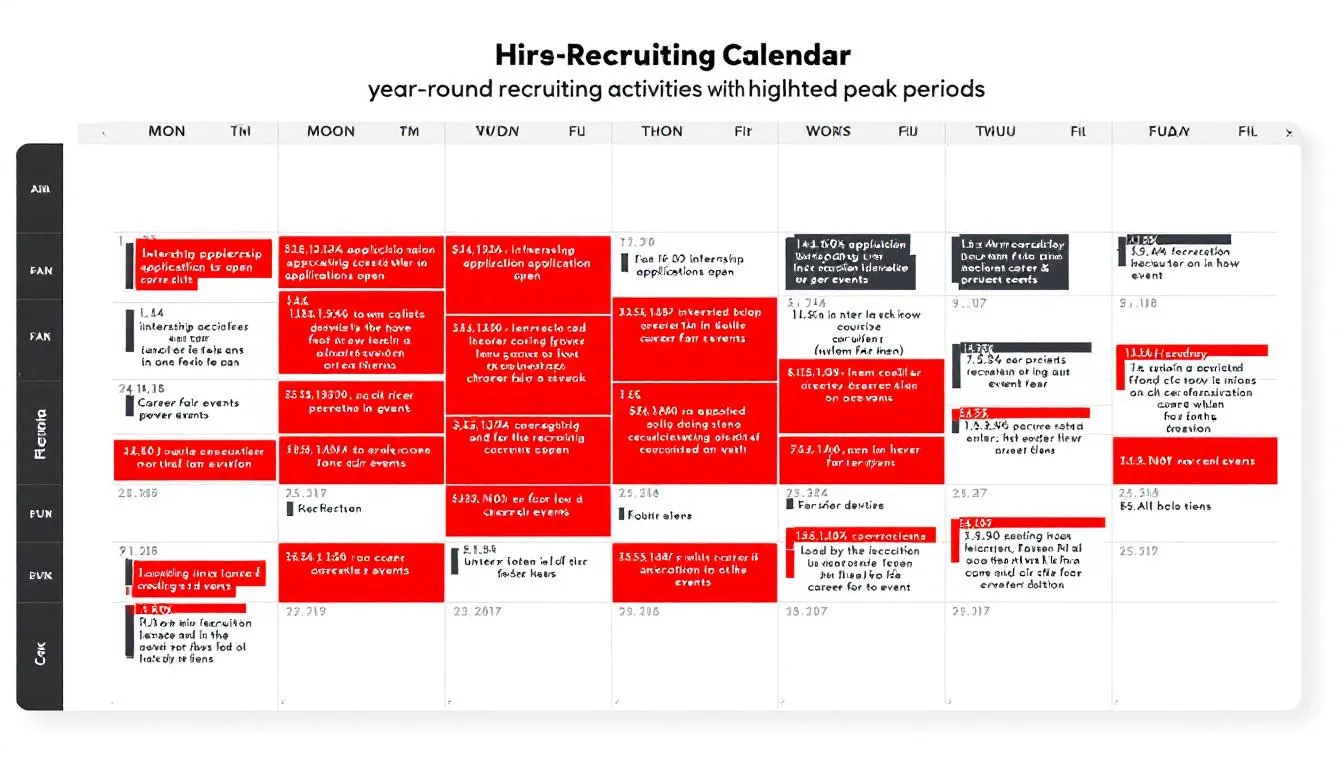
Hiring triggers: Fund close (3–6 months), associate departure (backfill), add-on spree (capacity bump) — set Google Alerts and LinkedIn tracking.
| Month | US Activity | UK/EU Activity | Why Now | Your Focus | Output |
|---|---|---|---|---|---|
| Jan | Slow → Ramp | Peak Season | Post-bonus mobility | Target list, materials | 50–100 firm list |
| Feb | Peak Begins | Peak Season | Deal rebound | Heavy networking | 10–15 warm intros |
| Mar | Peak Season | Peak Season | Q1 reviews end | Applications launch | 15–20 applications |
| Apr | Peak Season | Peak → Slow | Portfolio planning | Interview prep | 4–8 first rounds |
| May | Peak → Slow | Slow Season | Final Q1 decisions | Case studies | 3–7 final rounds |
| Jun | Summer Lull | Slow Season | Pre-summer hiring | Process completion | 1–2 offers |
| Jul | Summer Lull | Slow Season | Vacation mode | Skill building | Technical prep |
| Aug | Summer Lull | Slow Season | Deal restart | Research refresh | Updated materials |
| Sep | Peak Begins | Peak Begins | Post on-cycle backfill | Heavy applications | 20+ applications |
| Oct | Peak Season | Peak Season | Hiring urgency | Interview sprint | Multiple finals |
| Nov | Peak Season | Peak Season | Year-end needs | Decision time | Offer negotiations |
| Dec | Holiday Slow | Peak → Slow | Bonus planning | Process wrap-up | Start planning |
Peaks (US): February–May (post-bonus supply + deal rebound), September–November (post on-cycle backfills). Lulls: June–August (summer), late December–January (holidays, then quick ramp post-bonus).
UK/EU windows: September–early December and January–April (bonus-driven cycles). Firm size nuance: Mega funds and upper middle market firms batch hire. Middle market and lower middle market firms hire when a specific need opens.
Choose a peak month set (US: Feb–May or Sep–Nov; UK/EU: Sep–Dec or Jan–Apr).
Peaks 5–7 apps/week; lulls 3–5/week. Keep 20–30 live processes in CRM.
Fund close, associate exits, add-on sprees. Review and adjust monthly.
This off-cycle private equity recruiting timeline shows exactly when to ramp outreach, interview, and close offers—so you’re not guessing. Off-cycle roles are available throughout the year and often require candidates to be ready for near-term start dates, as firms may look to fill positions quickly outside the traditional cycle.
For more detailed guidance, see our private equity networking guide to build connections, and learn how to break into private equity effectively.
Prepare thoroughly by downloading our private equity resume template and practicing your private equity case study interview skills.
| Metric | On-Cycle Process (MF/UMM) | Off-Cycle Process (MM/LMM) | Notes |
|---|---|---|---|
| Candidate Seniority | 0–8 months IB | 12–18+ months / broader backgrounds | More experience valued |
| Initial Response | 24–72 hours | 2–4 weeks | Less urgency pressure |
| Process Length | 1–2 days (MF) / 1–2 weeks (UMM) | 4–8 weeks (median 1–2 months) | More thorough evaluation |
| Offer Timing | Immediate / 48 hours | ~1–2 weeks post-final | Time to consider |
| Acceptance Window | Exploding offers | Flexible negotiation | Better work-life fit |
| Start Date | 18–24+ months | Immediate to 3–6 months | Faster career progression |
| Headhunter Role | Headhunter-gated | Direct + alumni-led access | Relationship-driven |
| Candidate Pool Density | Simultaneous, huge on-cycle cohort | Staggered, smaller off-cycle pools | Access path differences |
During the off-cycle recruitment process, candidates can expect to hear back from employers within a few weeks, though timelines can vary depending on firm needs and urgency.
FAQ: Off-Cycle Private Equity Recruiting
Outside of London, many UK/EU middle market and lower middle market private equity firms often expect proficiency in local languages, especially in countries like Germany, France, and Spain. While London-based firms are more English-centric, candidates targeting continental Europe should research language requirements and highlight any multilingual skills during their applications.
US peaks run February–May (post-bonus mobility + deal rebound) and September–November (post on-cycle backfills). UK/EU peaks are September–December and January–April, driven by bonus cycles. Asia varies by country but generally follows relationship-driven timelines rather than seasonal patterns.
Headhunters help with market intelligence but don’t control middle market and lower middle market hiring like they do mega funds. Direct outreach through alumni networks, sector contacts, and firm websites often proves more effective. Many successful candidates bypass headhunters entirely through warm introductions.
If you want personalized networking support or help identifying firms that align with your background, working 1-on-1 with industry professionals can give you a clear edge.
This timeline is your playbook for navigating the off-cycle private equity recruiting process with confidence. Start building your target list today, track hiring signals, and maintain steady networking and applications to maximize your chances of landing a private equity job. Candidates with backgrounds in investment banks or hedge funds are also highly sought after in private equity recruitment, as firms are eager to attract top talent from these pools.
January – March: Research & Preparation Phase
Target list: Build 50-100 middle market and lower middle market funds database. Track assets under management, deal size, sector focus, recent partners, and add-on activity.
Materials: Update resume with quantified deal experience, 60-second elevator pitch, 2 investment ideas you can defend, and basic LBO mechanics.
Networking start: Alumni and 2nd-degree introductions through banking groups and school networks. Map 10-15 warm introductions per month with 30% call conversion goal.
Technical prep: LBO modeling basics, paper LBO repetitions, case study storytelling. Schedule weekly mock interviews. Prioritize interview preparation several months in advance—ideally starting in your senior year—to maximize your chances in on-cycle recruiting.
Assets:
- 10-item preparation checklist
- Google Sheet tracker template
- 2 outreach scripts (alumni + banker/business development)
April – June: Peak Application Period
Apply as Q1 portfolio reviews conclude. Batch 5-7 targeted firms per week that match your sector expertise and investment thesis story.
Events: Attend 1-2 industry conferences monthly. Book coffee chats around networking events for maximum efficiency.
Response expectations: Initial replies commonly take 2-4 weeks versus on-cycle’s 24-48 hour timeline.
Interview lift-off: Initial rounds typically include both technical and behavioral interviews, and may involve a modeling test as part of the assessment process. Be prepared for multiple rounds of interviews throughout the application period. Keep two tracks running simultaneously—networking pipeline and formal applications.
Assets:
- “Apply within 48 hours” rule checklist
- Event-to-coffee follow-up email template
- CRM fields to track (contact, stage, dates, blockers)
July – September: Interview & Case Study Phase
Process shape: 4-8 weeks typical duration with spaced interview rounds. Senior exposure happens earlier at smaller funds versus mega fund hierarchies. The interview process generally progresses through multiple stages, from initial screening to more advanced technical and behavioral assessments.
Get Deal Flow Bullet — free, every Friday.
One email a week — real deal frameworks and technical breakdowns from a middle-market practitioner. No fluff.
Assessments: Take-home case studies and LBO modeling tests are common throughout the interview process. The process typically culminates in a final round, often held at the firm’s office (or virtually), where candidates face both technical and behavioral interviews, including presentations with investment thesis and risk factors. Expect pushback questions and scenario analysis.
Cadence: Maintain weekly practice cases. Execute thank-you loop (24-hour note + 2-week value-add update).
Reality check: If any process drifts beyond 6 months, probability drops significantly. Reinvest time in higher-probability opportunities.
Assets:
- Case study slide skeleton (5-7 slides maximum)
- Mini-math reference (IRR ≈ MOIC^(1/years) − 1)
- Thank-you and nudge email templates
October – December: Decision & Offer Phase
Decisions: Offers typically arrive 1-2 weeks after final interviews. The off-cycle process often features an extended timeline, giving candidates more time to prepare and consider their options, unlike the immediate nature of an on-cycle offer at mega funds.
Acceptance windows: Reasonable decision timelines (days to weeks) with room to negotiate start dates and compensation mix.
Start dates: Immediate to 3-6 months versus mega fund 18-24+ month delays.
Wrap-up: Background checks, reference calls, and transition planning with current employer.
Assets:
- Offer evaluation checklist (cash, bonus, carry, title, board seats, growth path)
- Start-date negotiation conversation scripts
Off Cycle Options: Exploring Your Choices
Off-cycle recruiting opens the door to a wide range of private equity opportunities beyond the traditional on-cycle path. While on-cycle recruiting is fast-paced and focused on mega funds, off-cycle recruiting allows you to explore roles at smaller private equity firms, growth equity funds, and even venture capital firms. These off-cycle options often provide more hands-on experience, broader responsibilities, and faster career progression.
Candidates should take the time to research different private equity firms, connect with industry professionals, and evaluate each opportunity based on firm culture, investment strategy, and long-term career prospects. Off cycle opportunities can be found year-round, and many firms value candidates who take the initiative to reach out directly. By considering a range of off-cycle options, you can find a private equity job that aligns with your interests and sets you up for long-term success in the industry.
Strategic Advantages of the Off-Cycle Timeline
Prep depth: 3-6 months to build credible investment theses and strengthen technical weak spots versus on-cycle’s cramming approach.
Access: Thousands of middle market and lower middle market firms versus ~50-100 megafunds. More specialist sector fits and geographic options.
Process fit: More relationship-driven evaluation. Partners test commercial judgment and culture fit, not just test-taking speed.
Hours (nuanced): Baseline ~60-70 hours per week, spiking to 80+ hours during live deals. Off-cycle and middle market hours may be more predictable outside deal sprints.
Actionable Off-Cycle Recruiting Plan

| Month | Input Goal | Output Target | Weekly Time | Key Milestone |
|---|---|---|---|---|
| Jan | Map 60 firms | 10 warm intros | 10 hours | Target list complete |
| Feb | 15 networking calls | 3 application invites | 12 hours | Materials finalized |
| Mar | 20 applications | 5 first rounds | 15 hours | Interview prep locked |
| Apr | 15 applications | 8 first rounds | 18 hours | Technical skills sharp |
| May | Case study prep | 3 final rounds | 20 hours | Presentation ready |
| Jun | Interview execution | 2 offers | 15 hours | Decision framework |
| Jul-Aug | Skill building | Updated materials | 8 hours | Technical refresh |
| Sep | 25 applications | 6 first rounds | 20 hours | Peak season execution |
| Oct | Interview sprint | 4 final rounds | 25 hours | Multiple processes |
| Nov | Offer negotiations | 1-2 acceptances | 15 hours | Decision time |
| Dec | Transition planning | Start date locked | 5 hours | Onboarding prep |
| Networking cadence: 5-10 tailored emails per week OR 10-15 warm introductions per month. Target ~30% call conversion rate. Consider reaching out to both large PE firms and smaller PE firms, as the off-cycle recruitment process can differ. Smaller PE firms may have unique timelines and evaluation criteria, so understanding these nuances can increase your chances of success. |
Applications: Peaks 5–7 firms per week (≈20–28/mo); lulls 3–5 per week. Maintain 20–30 active opportunities in pipeline.
Prep block: 15-20 hours per week for 3 months (mix: LBO repetitions, case studies, mock interviews).
Networking Strategy and Outreach Cadence
Cadence (weekly rotation):
- Week 1: Alumni and 2nd-degree connections (banking groups, business school)
- Week 2: Investment bankers and consultants tied to target sectors
- Week 3: Direct to private equity firms (info@ addresses, associates, VPs)
- Week 4: Polite follow-up bumps + add 10 new targets; repeat cycle
Targets: 2-3 real conversations per week. Follow up every 6-8 weeks with value-add (deal note, sector update, market insight).
Headhunters vs direct: Use headhunters for market intelligence. Do not rely on them for middle market and lower middle market opportunities—direct outreach wins significant share.
Hiring signals (proactive lead generation):
- New fund close (hire in 3-6 months)
- Associate departure (LinkedIn job changes)
- Add-on acquisition spree at portfolio companies
- New office or geographic expansion
- Senior strategic hire (new vertical → team buildout)
Assets:
- 3 one-liner email templates (alumni, banker referral, direct to associate)
- “Signals” tracking checklist with Google Alert setup
Application Timeline and Deadlines
Speed rule: Apply within 48 hours of discovering any job posting. Off-cycle moves fast despite longer processes.
Batching: Submit 5-7 targeted applications per week during peak recruiting periods.
CRM discipline: Track posting date, expected reply timeline, follow-up schedule, current stage, and any process blockers.
Healthy pipeline: Maintain 20-30 active processes. Prune opportunities stale beyond 60 days unless warm signal appears.
Case Study: Successful Off-Cycle Timeline
Sarah’s Track: Corporate development professional targeting $100-500M enterprise value middle market funds.
8-month timeline: January research → March warm introductions → May interview launches → July/August final rounds → September offer acceptance.
Activity metrics: 150 total applications, 25 first-round interviews, 8 final presentations, 3 competitive offers.
Outcome: Base salary increased to $175K (from $120K corporate development) plus performance bonus and carry eligibility. Start date in 3 months versus 24-month mega fund delays.
What moved the needle: Sector specialization (healthcare services), warm introductions through former colleagues, and one standout take-home case study that demonstrated operational insight.
Common Off-Cycle Timeline Mistakes
Starting too late—Begin preparation 6-12 months before target start date. Off-cycle rewards preparation depth.
Only applying during “busy season”—Maintain steady application flow. Needs-based hiring happens year-round.
No follow-up system—Touch base every 4-6 weeks with substantive updates, not empty check-ins.
Only chasing large funds—Focusing only on large firms, top tier firms, or top firms can limit your opportunities, as the majority of associate seats exist below $1B in AUM. Most roles are at smaller and mid-sized firms, so align expectations to deal size and sector fit.
Speed over fit—Off-cycle private equity recruiting rewards cultural and commercial fit, not just technical test-taking ability.
Off-Cycle vs On-Cycle Timeline Comparison
| Metric | On-Cycle (MF/UMM) | Off-Cycle (MM/LMM) | Notes |
|---|---|---|---|
| Candidate Seniority | 0-8 months IB | 12-18+ months / broader backgrounds | More experience valued |
| Initial Response | 24-72 hours | 2-4 weeks | Less urgency pressure |
| Process Length | 1-2 days (MF) / 1-2 weeks (UMM) | 4-8 weeks (median 1-2 months) | More thorough evaluation |
| Offer Timing | Immediate/48 hours | ~1-2 weeks post-final | Time to consider |
| Acceptance Window | Exploding offers | Flexible negotiation | Better work-life fit |
| Start Date | 18-24+ months | Immediate to 3-6 months | Faster career progression |
| Headhunter Role | Dominant | Mixed/direct outreach | Relationship-driven |
Regional Nuances
US: Hybrid market with visible mega fund on-cycle plus broad middle market off-cycle opportunities. Peak seasons February-May and September-November.
UK/EU: Almost entirely off-cycle recruiting. Favors ≥18 months experience. Peak seasons September-early December and January-April. Language requirements outside London.
Asia (HK/SG/JP/CN): Highly relationship-driven processes. Timelines vary significantly by country. Track global firms’ local expansion as early hiring signals.
Career Development: Long-Term Impact of Off-Cycle Recruiting
Pursuing off-cycle recruiting can be a game-changer for your long-term career development in private equity. Off cycle opportunities often provide earlier responsibility, more direct exposure to investment decisions, and the chance to work closely with senior investment professionals. Smaller firms and growth equity funds, in particular, may offer more flexible career paths, faster promotions, and greater access to carry and board seats.
By taking the off-cycle route, you’ll also build a diverse network of industry contacts and gain a deeper understanding of different investment strategies and firm cultures. This experience can accelerate your learning curve and open doors to future roles in private equity, growth equity, or even venture capital. Ultimately, off-cycle recruiting isn’t just about landing your first private equity job—it’s about setting the foundation for a rewarding, long-term career in the industry. Consider your options carefully, and use off-cycle recruiting as a strategic step toward your professional goals.
Frequently Asked Questions
US peaks run February-May (post-bonus mobility + deal rebound) and September-November (post on-cycle backfills). UK/EU peaks are September-December and January-April, driven by bonus cycles. Asia varies by country but generally follows relationship-driven timelines rather than seasonal patterns.
Headhunters help with market intelligence but don’t control middle market and lower middle market hiring like they do mega funds. Direct outreach through alumni networks, sector contacts, and firm websites often proves more effective. Many successful candidates bypass headhunters entirely through warm introductions.
Offers typically arrive 1-2 weeks after final interviews, with reasonable acceptance windows (days to weeks). Start dates range from immediate to 3-6 months, dramatically faster than mega fund 18-24+ month delays. This creates real career momentum versus extended waiting periods.
Yes, if you can demonstrate transaction experience and commercial judgment. Middle market private equity firms value diverse backgrounds that bring operational insight, not just financial modeling speed. Highlight deal exposure, sector expertise, and any portfolio company interaction experience.
Address sponsorship needs transparently in initial conversations, not after final rounds. Many middle market firms are more flexible than mega funds, especially for candidates with specialized sector knowledge. Research each firm’s historical sponsorship patterns and lead with your unique value proposition.
The off-cycle private equity recruiting timeline isn’t a backup plan—it’s the primary path into the industry for most professionals. While headlines chase mega fund drama, the real opportunity lies in middle market and lower middle market firms that hire based on actual needs, offer better learning curves, and provide faster paths to meaningful carry.
Start building your target list today. Map the warm introductions. Track the hiring signals. The best opportunities won’t wait for you to get ready.